“Good design is obvious. Great design is transparent.”
– Joe Sparano
If you’ve ever walked into a room and felt instantly calm, energized, or inspired, that wasn’t an accident. It was interior design at work. And here’s the good news: you don’t need to be a professional designer to make your home look and feel amazing. In fact, I’ve seen it time and time again, small design decisions can completely transform a space!
In this guide, we’ll break down interior design basics every homeowner should know, using simple practical principles you can actually apply. Whether you are decorating a new home or refreshing a tired room, these foundational ideas will help you create a space that’s both stylish and functional without overwhelming you.
Let’s break it down.
Understanding the Core Principles of Interior Design
At its heart, interior design follows a few timeless principles. Once you understand them, every decision becomes easier.
There are five main principles of interior design:
- Balance
- Harmony and Unity
- Rhythm
- Emphasis
- Proportion and Scale
Balance ensures that a room doesn’t feel visually lopsided. This can be:
- Symmetrical (matching furniture on both sides)
- Asymmetrical (different items with equal visual weight)
- Radial (arranged around a central point)
Harmony and Unity create a sense of cohesion. Colors, materials, and styles should feel connected, even if they’re not identical.
Rhythm guides the eye through a space using repetition, contrast, or progression.
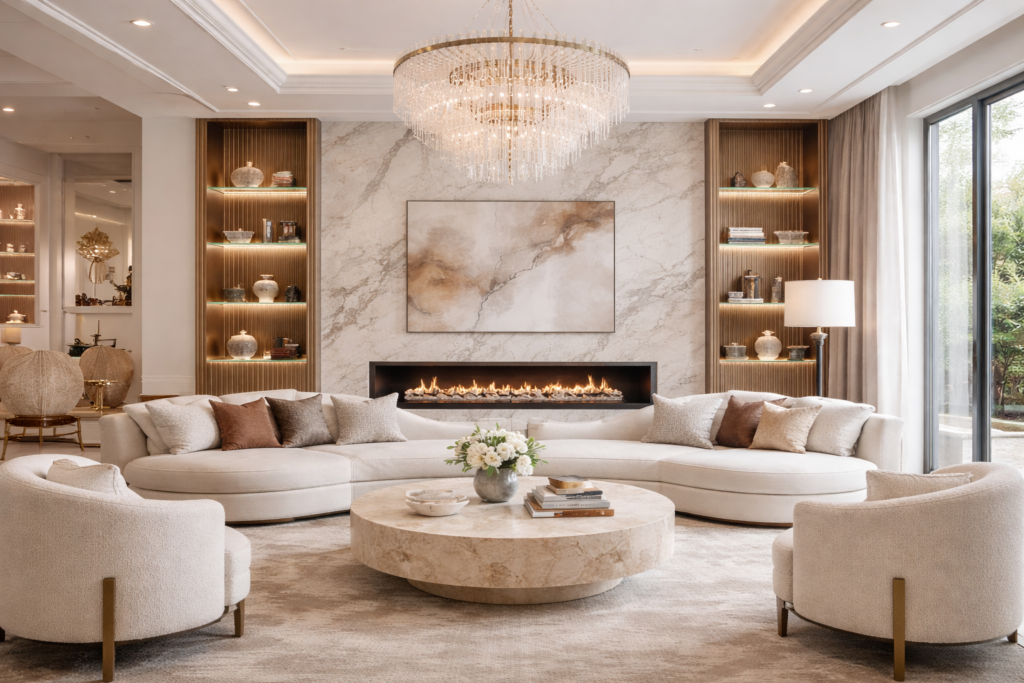
Emphasis gives the room a focal point, like a fireplace, statement art, or feature wall.
Proportion and Scale ensure furniture and décor fit the room properly—no tiny rugs in giant living rooms or oversized sofas in tight spaces.
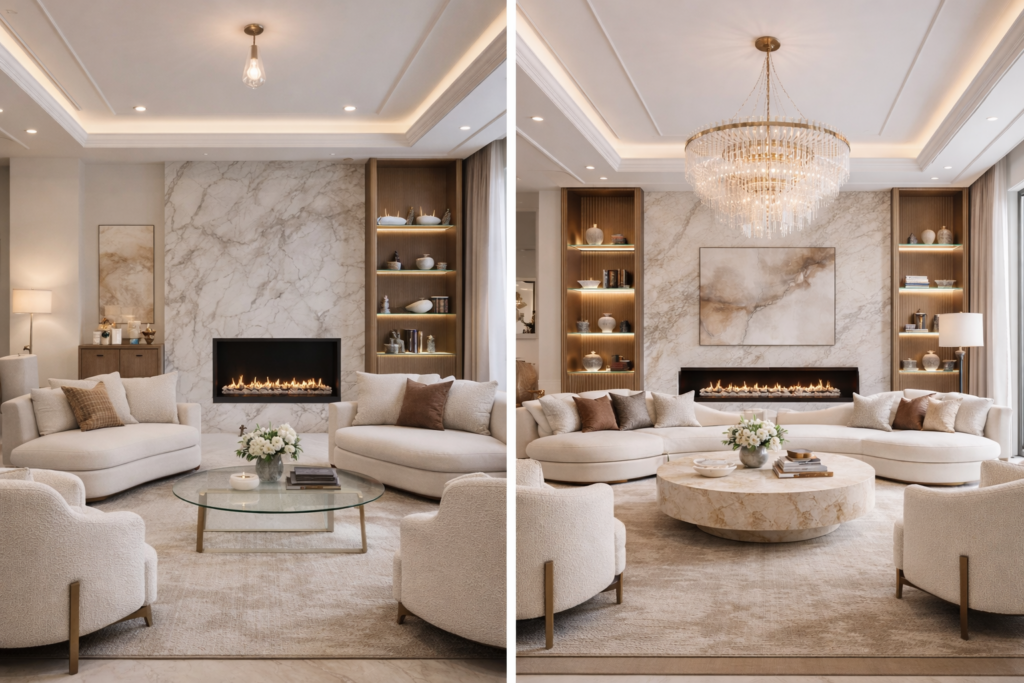
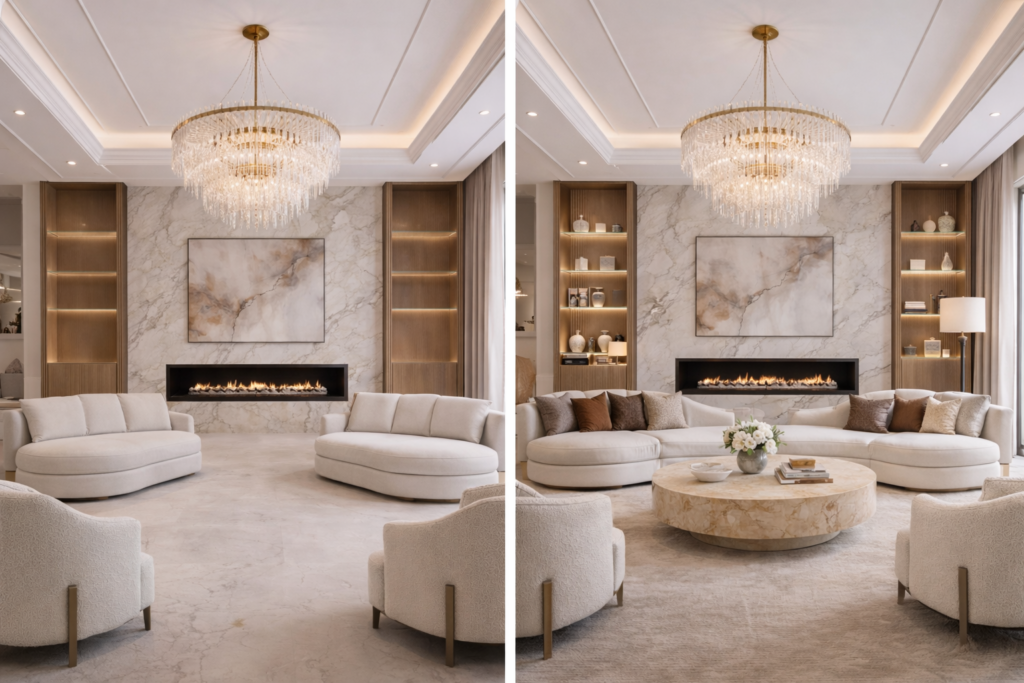
To put these core principles to the test, look at the images below. Specifically, compared to the image on the right, the image on the left leans heavily on symmetry without strong emphasis, rhythm, or scale to elevate the space. This side-by-side comparison clearly shows that applying all five principles, not just one or two, creates a space that feels complete and thoughtfully designed. Ultimately, master these principles, and you’ll avoid the most common (and expensive) design mistakes homeowners make.
Choosing the Right Color Palette for Your Home
Color sets the emotional tone of a space before anything else.
For example, warm colors like beige, terracotta, and soft yellows create coziness and energy. In contrast, cool colors like blues, greens, and grays promote calm and openness. Additionally, neutrals act as a grounding base, helping rooms feel timeless.
A reliable rule many designers use is the 60-30-10 rule:
- 60% dominant color (walls, large furniture)
- 30% secondary color (upholstery, curtains)
- 10% accent color (pillows, art, décor)
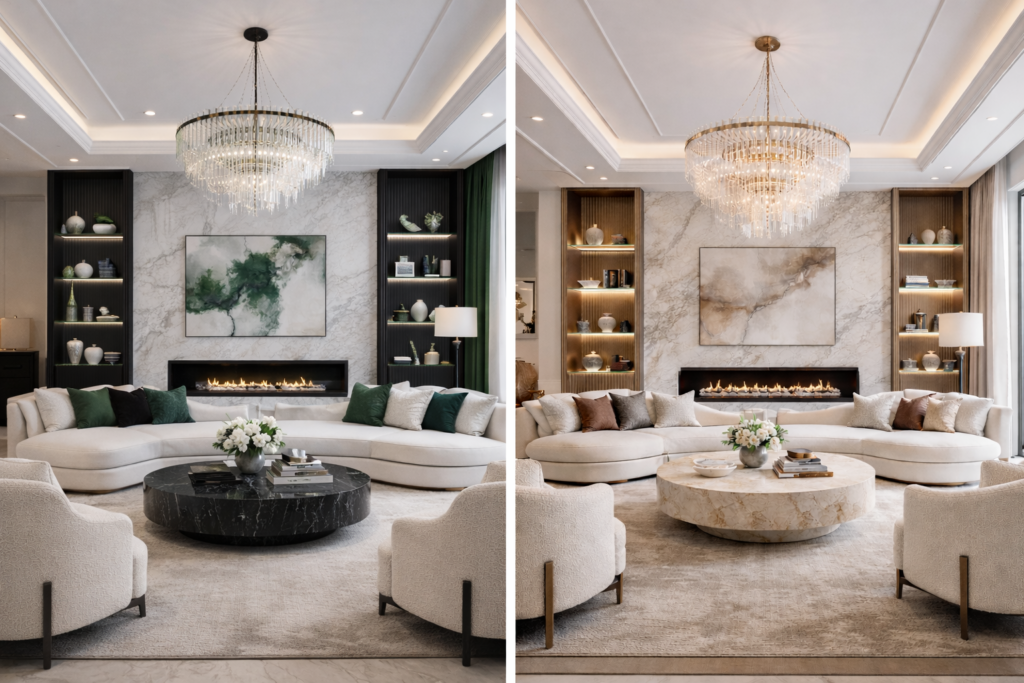
In the images below, each design gives a different tone based on the color palette. This approach keeps rooms visually balanced while still allowing personality to shine through.
Furniture Layout and Space Planning Essentials
A beautiful room that’s hard to move through will never feel right.
Start by measuring your space, every inch matters. Then plan furniture placement around how the room is actually used.
Good layouts prioritize:
- Clear walkways and traffic flow
- Conversation-friendly seating
- Functional zones in open spaces
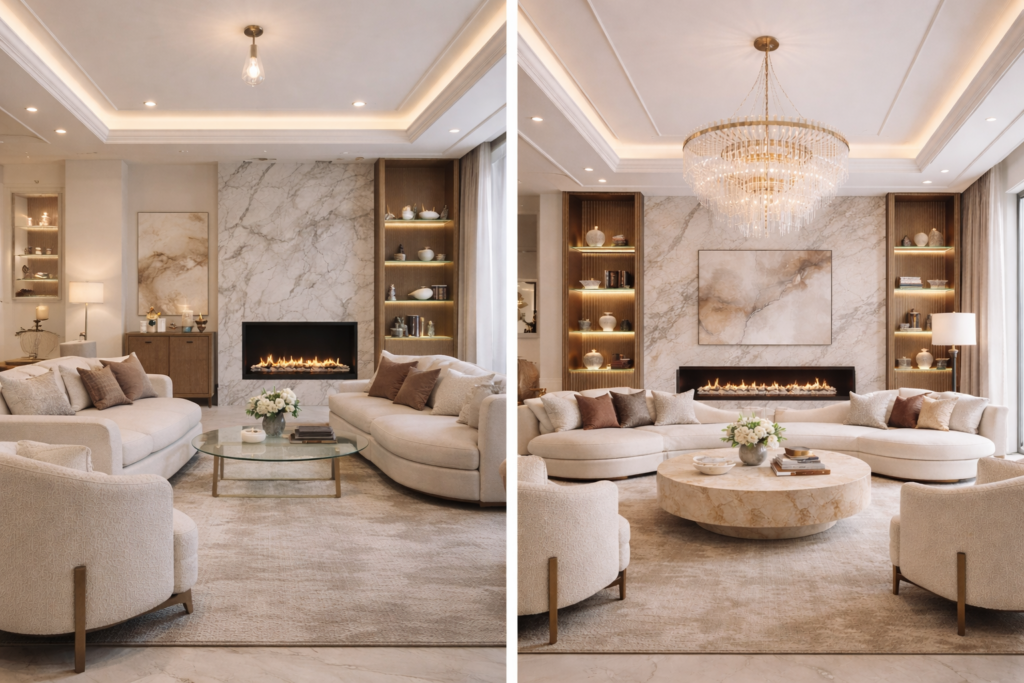
Looking at the images below, you can immediately see why scale is important. First, always consider scale. For example, avoid pushing all furniture against the walls, as shown in the left design. Instead, float pieces slightly inward to make the room feel more intentional and inviting. Ultimately, furniture should match the size of the room, neither overwhelming it nor disappearing into it, creating a timeless feel.
Lighting Fundamentals Every Home Needs
Lighting is one of the most underestimated design elements and one of the most powerful.
Great interiors rely on layered lighting, which includes:
- Ambient lighting for overall illumination
- Task lighting for reading, cooking, or working
- Accent lighting to highlight architectural features or décor
Natural light is a bonus, but even dim spaces can feel bright and welcoming with the right lighting strategy. Lamps, wall sconces, and dimmers add flexibility and warmth that overhead lighting alone can’t achieve.
The Importance of Texture and Materials
If your space feels flat or unfinished, it’s probably missing texture.
Mixing materials adds depth and interest:
- Soft textiles like rugs, curtains, and pillows
- Hard surfaces like wood, metal, and stone
- Smooth finishes balanced with rough or organic ones
The images below show what a living room looks like when it is missing texture and materials (the design on the left) compared to when the design looks finished (the one on the right). A neutral room with layered textures often feels more sophisticated than a colorful room without them. Texture is what makes spaces feel lived-in and comfortable rather than staged.
Decorating with Purpose: Accessories and Art
Accessories should enhance a space—not clutter it.
When decorating:
- Group items in odd numbers for visual interest
- Vary heights and shapes
- Leave negative space so pieces can breathe
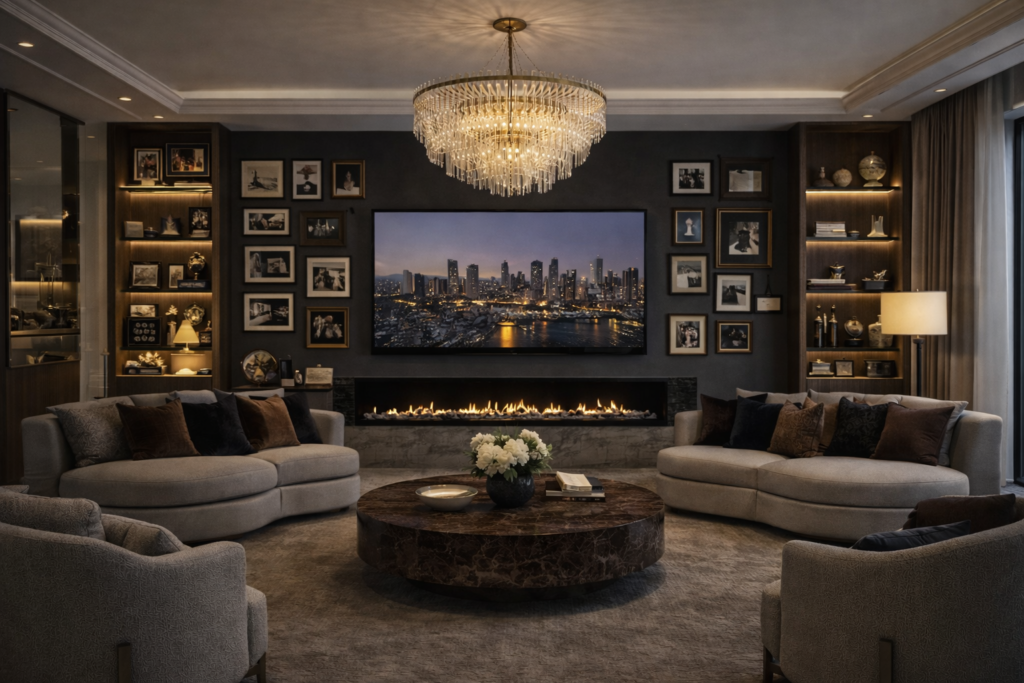
First, artwork should be proportionate to the wall and hung at eye level. Likewise, shelves and tabletops benefit from intentional styling rather than overfilling. Ultimately, remember that not every surface needs something on it.
Creating a Cohesive Style Throughout Your Home
Your home doesn’t need to follow one strict design style but it does need consistency.
Whether you lean modern, traditional, minimalist, or eclectic, cohesion comes from:
- Repeating colors and materials across rooms
- Maintaining similar levels of formality
- Letting one style lead while others support
You can absolutely mix styles, just do it thoughtfully. The goal is flow, not sameness.
Common Interior Design Mistakes Homeowners Should Avoid
Even with good intentions, many homeowners fall into the same traps:
- Buying furniture before planning the layout
- Choosing rugs that are too small
- Ignoring lighting altogether
- Overmatching colors and décor
- Forgetting about storage and functionality
To elevates the look and feel of your home, avoiding these mistakes as soon as possible.
Conclusion
Interior design isn’t just about rules. It’s about understanding why those rules exist. Once you grasp these interior design basics every homeowner should know, decorating becomes less stressful and far more enjoyable.
Start small. Trust your instincts. Design with intention, not perfection. When your home supports how you live and reflects who you are, that’s when great design truly shines.
Finally, when you are ready to transform your space, revisit these fundamentals often and let your home evolve beautifully over time.
Dreaming of a home refresh without breaking the bank? Start here: Interior Design on a Budget for Homeowners in 2026.
