A quote by Nate Berkus states, “Your home should tell the story of who you are and be a collection of what you love brought together under one roof.” I come back to that line every time I walk into a space that just feels right. Here is the thing, what creates that feeling isn’t some expensive piece of furniture or trendy style. It is always when homeowners know and understand their interior design styles.
Many more homeowners are realizing that decorating without knowing their style leads to mismatched rooms, wasted money, and a space that never quite feels finished. Don’t just decorate, be intentional about your styling. Curate your space to reflect your interests, personality, and lifestyle. All these starts with understanding the different types of interior design styles. When you know the difference, everything changes. Choosing colors becomes easier. Furniture starts to make sense. Décor feels intentional. And finally, your home starts to look curated instead of accidental.
In this guide, we will explore twenty (20) of the most popular interior design styles. By the end, you won’t just recognize these styles, you will know which one speaks to you and how to start bringing it into your own space.
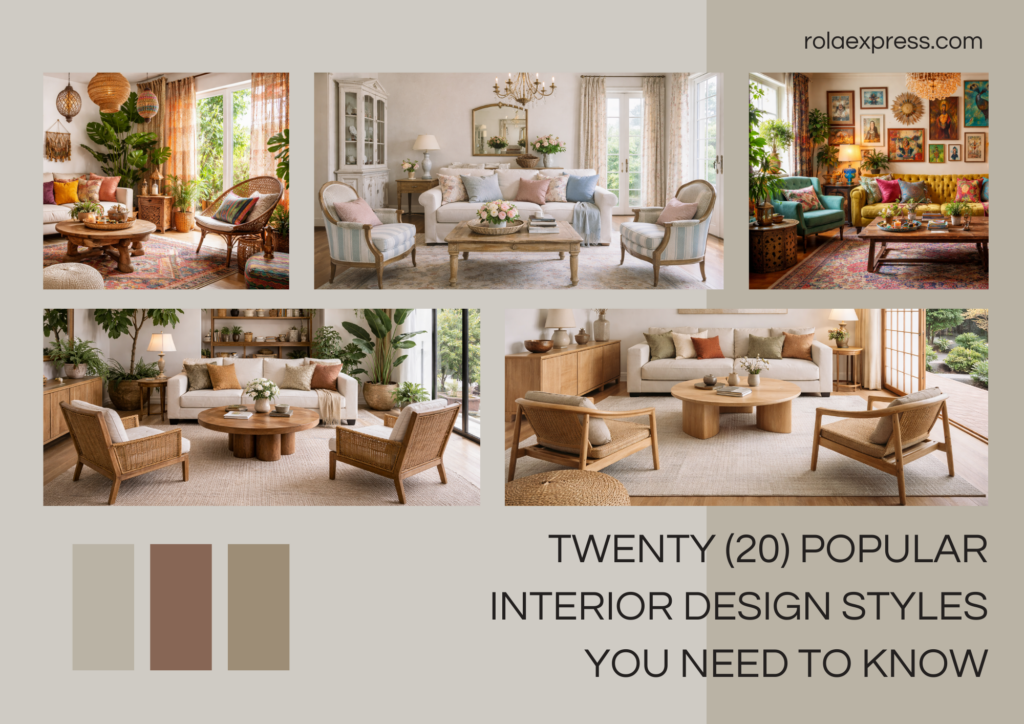
What Are Interior Design Styles?
Interior design styles are recognizable ‘design languages’ that shape how a space looks, feels, and functions. Each style carries its own rules for color palettes, furniture choices, materials, layout, and décor. When these elements work together under one style, a room feels cohesive and intentional instead of random and cluttered.
Understanding interior design styles matters because it gives you a clear framework for decision-making. Instead of guessing which sofa, rug, or lighting fixture might work, you choose pieces that align with a defined aesthetic. Whether that is modern simplicity, traditional elegance, or cozy farmhouse charm.
Here are six (6) reasons why interior design styles matter:
- A design style guides your color palette, ensuring harmony across rooms.
- It influences your furniture shapes, materials, and finishes.
- It determines how much pattern, texture, and décor to use.
- It reflects cultural, historical, or lifestyle influences behind the look.
- It helps you avoid costly decorating mistakes and impulse buys.
- It creates a home that feels cohesive, balanced, and personal.
When you know your interior design style, decorating becomes easier, faster, and far more enjoyable.
20 Interior Design Styles You Need to Know
- Modern Interior Design
- Contemporary Interior Design
- Minimalist Interior Design
- Traditional Interior Design
- Victorian Interior Design
- Colonial Interior Design
- Transitional Interior Design
- Bohemian Interior Design
- Eclectic Interior Design
- Scandinavian Interior Design
- Japandi Interior Design
- Rustic Interior Design
- Biophilic Interior Design
- Farmhouse Interior Design
- Industrial Interior Design
- French Country Interior Design
- Mediterranean Interior Design
- Moroccan Interior Design
- Gothic Interior Design
- Coastal Interior Design
Modern Interior Design
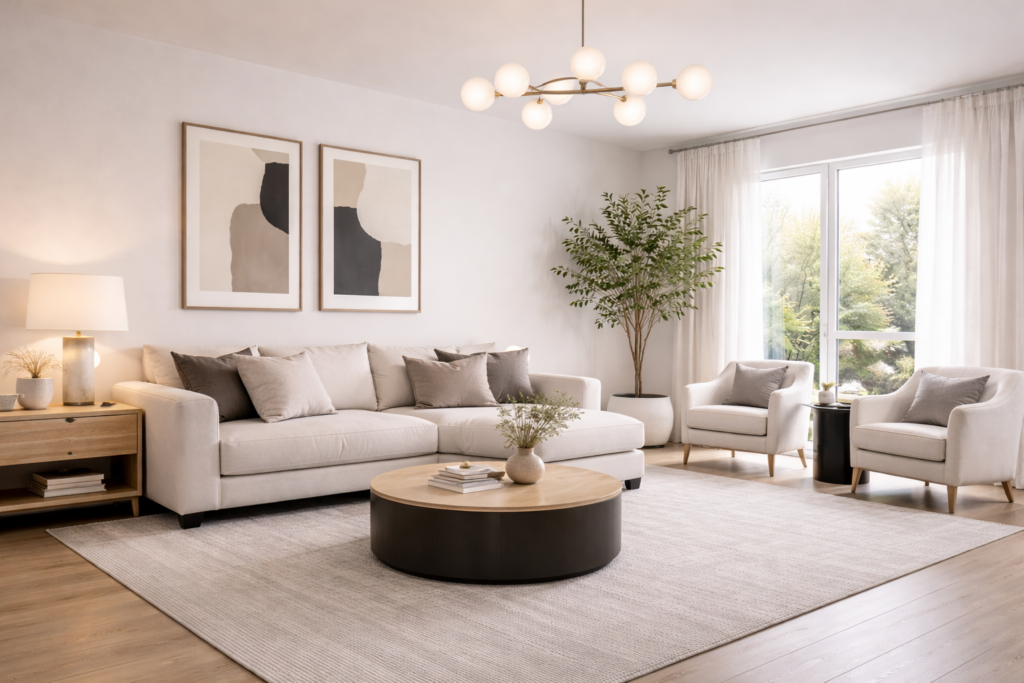
Modern interior design is rooted in the early–mid 20th century and built on one powerful idea: form follows function. Every element in the room has a purpose. Nothing is excessive. Nothing is ornamental for the sake of decoration. The result is a space that feels calm, open, and effortlessly sophisticated.
When compared to traditional design, this style favors clean lines, open layouts, and a restrained approach to color and décor. You will notice low-profile furniture, smooth surfaces, and an emphasis on natural light. Instead of filling a room, modern design lets the room breathe.
Key Characteristics
- Clean, straight lines and geometric forms
- Neutral color palettes: white, beige, gray, black
- Open floor plans with minimal visual barriers
- Low-profile, functional furniture
- Limited décor and clutter-free surfaces
Materials & Finishes
- Glass, steel, chrome, and concrete
- Natural woods with minimal grain detail
- Leather, linen, and smooth textiles
- Flat-panel cabinetry and handleless hardware
Furniture & Layout
- Platform beds, streamlined sofas, and sleek coffee tables
- Furniture raised on legs to create visual lightness
- Intentional negative space (empty space is part of the design)
- Focus on balance and proportion rather than decoration
Color Palette
- Predominantly neutral tones
- Occasional bold accent (black, navy, or primary color art piece)
- Monochromatic layering for depth without clutter
How to Bring Modern Style into Your Home
- Declutter surfaces and embrace hidden storage
- Choose furniture with straight lines and simple silhouettes
- Stick to a neutral base and add interest through texture, not pattern
- Let in as much natural light as possible
- Use statement lighting or one bold art piece as a focal point
Modern interior design is ideal for anyone who loves simplicity, order, and timeless elegance. It is one of those interior design styles that shows you don’t need a lot of décors to create a refined space.
Contemporary Interior Design
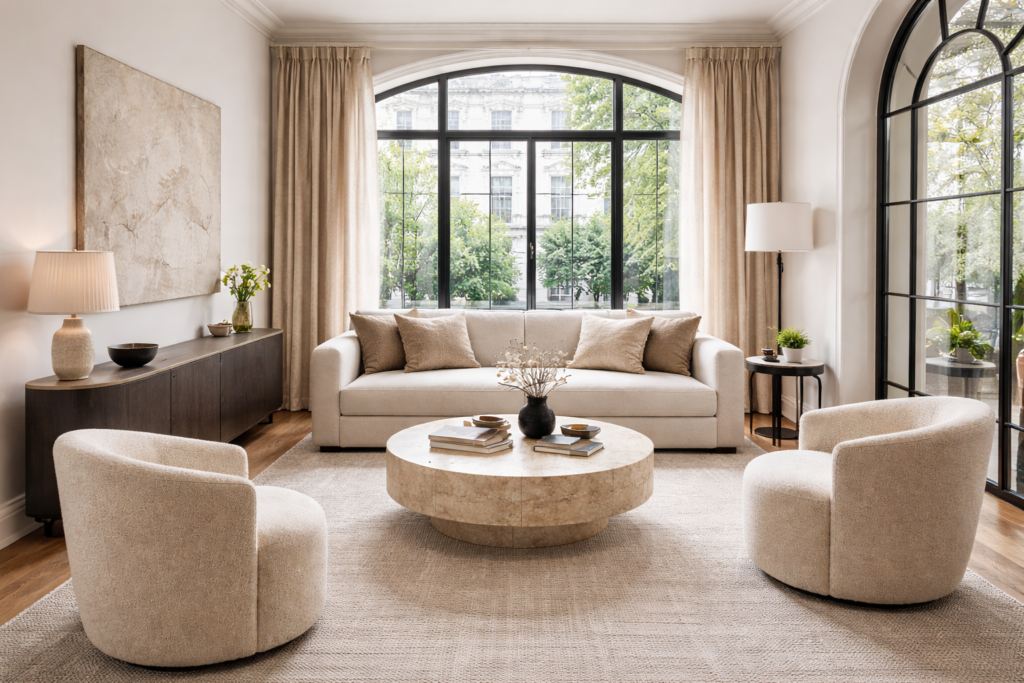
Contemporary interior design is often confused with modern style, but they are not the same. While modern design is rooted in a specific historical period, contemporary design is about the present moment. It evolves with current trends, materials, and lifestyles.
This style keeps the clean foundation you love from modern spaces but softens it with curves, texture, contrast, and statement pieces. Contemporary rooms feel fresh, artistic, and comfortable without looking busy.
Key Characteristics
- A neutral base layered with bold accents
- Curved lines and organic shapes
- Statement lighting and sculptural furniture
- Mix of materials and textures for visual interest
- Open, airy layouts with a welcoming feel
Materials & Finishes
- Warm woods mixed with metal or glass
- Plush textiles: boucle, velvet, wool, linen
- Matte finishes and subtle sheen contrasts
- Textured rugs, layered fabrics, and tactile décor
Furniture & Layout
- Curved sofas, rounded coffee tables, arched mirrors
- Sculptural chairs and eye-catching light fixtures
- Balanced negative space with intentional focal points
- Art-forward layouts that highlight décor as part of the design
Color Palette
- Neutrals: beige, taupe, gray, cream, black
- Trend-forward accents: deep green, terracotta, navy, mustard
- Contrast through light vs. dark rather than busy patterns
How to Bring Contemporary Style into Your Home
- Start with a neutral foundation, then layer textures
- Add one or two statement pieces (lighting, art, or furniture)
- Incorporate curves through mirrors, sofas, or décor
- Mix materials for depth instead of adding more color
- Keep the space uncluttered but visually rich
Contemporary interior design is perfect if you love staying current, appreciate artistic expression, and want a home that feels stylish yet comfortable. It is one of those interior design styles that mix modern living with personality.
Minimalist Interior Design
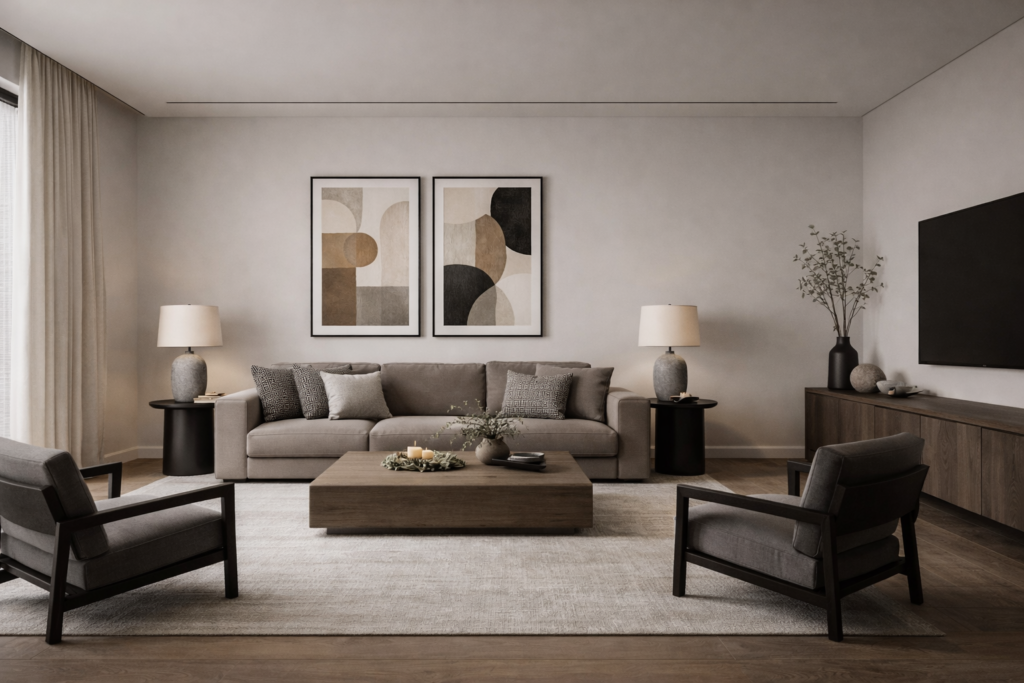
Minimalist interior design is built on a quiet but powerful principle: less, but better. Every item in the room earns its place. There’s no visual noise, no excess décor, and no overcrowding.
This is one of those interior design styles that strips a space down to its essentials while still feeling warm and livable. It’s not about making a home look empty; it’s about removing distractions so the architecture, light, and a few beautiful pieces can shine.
Key Characteristics
- Extremely clutter-free, open surfaces
- Limited color palette, often monochrome or tonal
- Clean lines and simple silhouettes
- Emphasis on space, light, and proportion
- Functional décor with purpose
Materials & Finishes
- Smooth woods, matte metals, glass, and stone
- Natural fabrics like linen, cotton, and wool
- Flat-front cabinetry and concealed storage
- Minimal hardware and seamless finishes
Furniture & Layout
- Low-profile sofas, platform beds, simple tables
- Furniture with exposed legs to create airiness
- Thoughtful spacing between pieces (negative space matters)
- Hidden storage to maintain visual simplicity
Color Palette
- Whites, creams, soft grays, beige, and black
- Subtle tonal layering instead of contrast
- Very limited use of patterns or bold colors
How to Bring Minimalist Style into Your Home
- Declutter ruthlessly and keep only essentials
- Choose quality over quantity in furniture and décor
- Use storage solutions to keep surfaces clear
- Let natural light be a major design feature
- Add warmth through texture rather than accessories
Minimalist interiors are ideal for those who crave peace, order, and simplicity. The result is a home that feels serene, intentional, and effortlessly elegant where every detail has meaning.
Traditional Interior Design
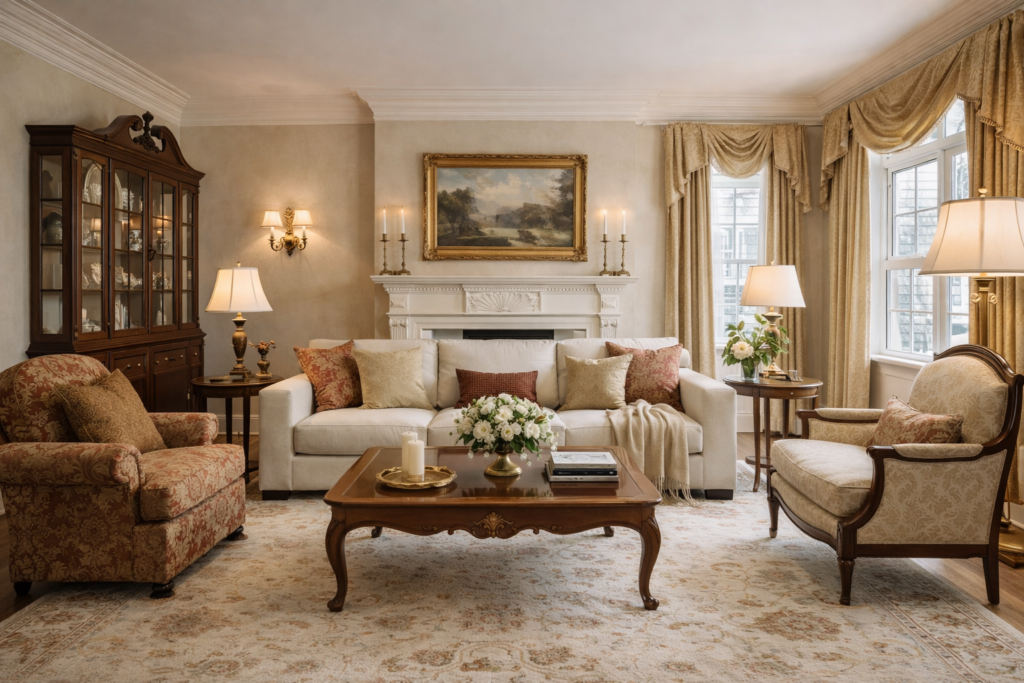
Traditional interior design is timeless, elegant, and deeply rooted in classic European décor. It celebrates symmetry, rich details, and refined furnishings that create rooms with warmth, order, and sophistication. Nothing feels trendy or experimental here. Everything feels established, graceful, and enduring.
This is one of those interior design styles that is all about comfort wrapped in elegance. You will see curved furniture lines, ornate woodwork, layered textiles, and carefully chosen décor that adds depth without overwhelming the space.
Key Characteristics
- Symmetrical layouts and balanced furniture placement
- Ornate details, moldings, and architectural trim
- Rich wood tones and classic silhouettes
- Layered textiles, patterns, and elegant décor
- A formal yet inviting atmosphere
Materials & Finishes
- Dark woods like mahogany, cherry, and walnut
- Brass, bronze, and antique metal finishes
- Upholstery in velvet, silk, damask, and linen
- Decorative moldings, wainscoting, and crown trim
Furniture & Layout
- Tufted sofas, wingback chairs, carved wood tables
- Matching furniture sets and coordinated décor
- Statement pieces like chandeliers and large mirrors
- Rugs and drapery used to frame the room elegantly
Color Palette
- Warm neutrals: beige, cream, taupe
- Deep tones: burgundy, navy, forest green, gold
- Florals, stripes, and damask patterns
How to Bring Traditional Style into Your Home
- Arrange furniture symmetrically around a focal point
- Incorporate rich wood furniture with elegant detailing
- Layer patterns through rugs, drapery, and upholstery
- Add classic lighting like chandeliers or table lamps with shades
- Use décor thoughtfully: mirrors, artwork, and antiques
Traditional interiors are perfect for those who love classic beauty, structure, and timeless elegance. It is one of those interior design styles that never feels outdated because it is built on design principles that have lasted for centuries.
Victorian Interior Design
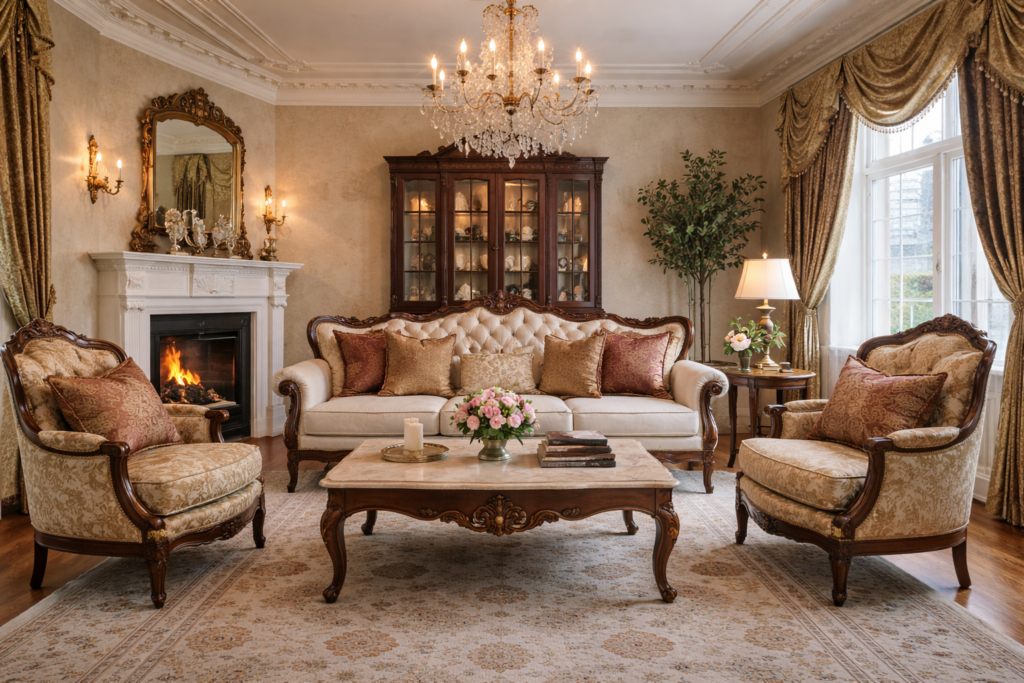
Victorian interior design is dramatic, romantic, and richly decorative. Born in the 19th century during the Victorian era, this style embraces ornamentation, pattern, and opulence. Rooms are layered, detailed, and full of personality. Every corner offers something to admire.
Unlike minimalist or modern spaces, Victorian interiors celebrate abundance. Patterned wallpaper, dark wood furniture, lace curtains, velvet upholstery, and antique accessories all work together to create a space that feels historic, elegant, and deeply expressive.
Key Characteristics
- Highly decorative rooms with layered details
- Patterned wallpaper and richly dressed windows
- Dark, carved wood furniture with ornate shapes
- Decorative trims, moldings, and ceiling medallions
- A collected, antique-filled aesthetic
Materials & Finishes
- Mahogany, walnut, and rosewood furniture
- Velvet, brocade, lace, and fringe textiles
- Brass, gold, and porcelain accents
- Stained glass, patterned tile, and carved woodwork
Furniture & Layout
- Tufted sofas, fainting couches, canopy beds
- Gallery walls with framed art and portraits
- Decorative side tables, curios, and display cabinets
- Layered rugs and heavy drapery for visual richness
Color Palette
- Deep, moody hues: burgundy, emerald, navy, plum
- Creams and florals as pattern accents
- Gold and brass for warmth and luxury
How to Bring Victorian Style into Your Home
- Use patterned wallpaper or richly colored paint
- Incorporate antique or antique-style furniture
- Layer textiles through curtains, rugs, and upholstery
- Add ornate mirrors, frames, and decorative objects
- Embrace more décor rather than less
Victorian interiors are ideal for those who love history, romance, and expressive décor. It is one of those interior design styles that turns a home into a storybook setting.
Colonial Interior Design
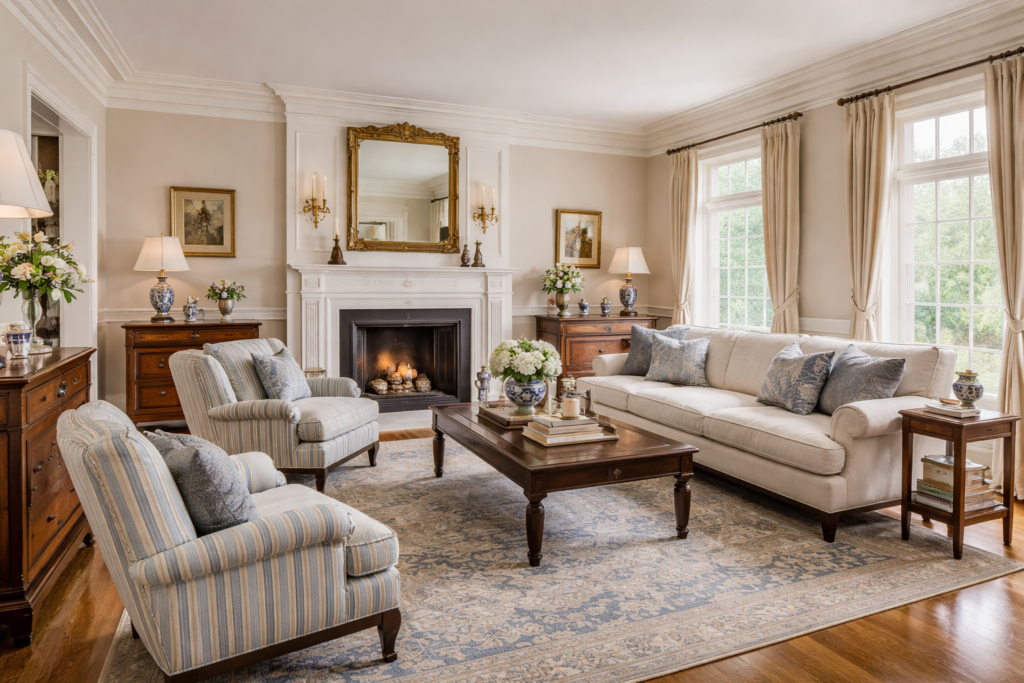
Colonial interior design is grounded in simplicity, symmetry, and practicality. Inspired by early American homes, this style reflects a time when furniture was handcrafted, layouts were orderly, and décor was purposeful rather than decorative.
The result is a space that feels warm, structured, and timeless. Nothing is flashy. Nothing is excessive. Colonial interiors rely on quality wood furniture, balanced room arrangements, and subtle textiles to create a home that feels welcoming and dignified.
Key Characteristics
- Strong symmetry and orderly layouts
- Solid wood furniture with simple craftsmanship
- Minimal ornamentation and practical décor
- Fireplaces as central focal points
- Wainscoting, crown molding, and classic architectural details
Materials & Finishes
- Oak, maple, pine, and cherry wood tones
- Brass and iron hardware
- Cotton, wool, and linen textiles
- Painted wood paneling and traditional millwork
Furniture & Layout
- Spindle-back chairs, rectangular dining tables, wooden chests
- Four-poster beds and simple headboards
- Matching pairs of lamps or chairs for balance
- Functional storage pieces like hutches and sideboards
Color Palette
- Soft neutrals: cream, beige, muted yellow, light blue
- Earth tones inspired by natural dyes
- Subtle stripes, checks, and small-scale florals
How to Bring Colonial Style into Your Home
- Arrange furniture symmetrically around a fireplace or focal wall
- Choose sturdy wooden furniture with clean, simple lines
- Add classic millwork like wainscoting or crown molding
- Use understated textiles with small patterns
- Incorporate brass accents and traditional lighting
Colonial interiors are perfect for those who value tradition, craftsmanship, and understated elegance. It is one of those interior design styles that feels rooted, balanced, and effortlessly timeless.
Transitional Interior Design
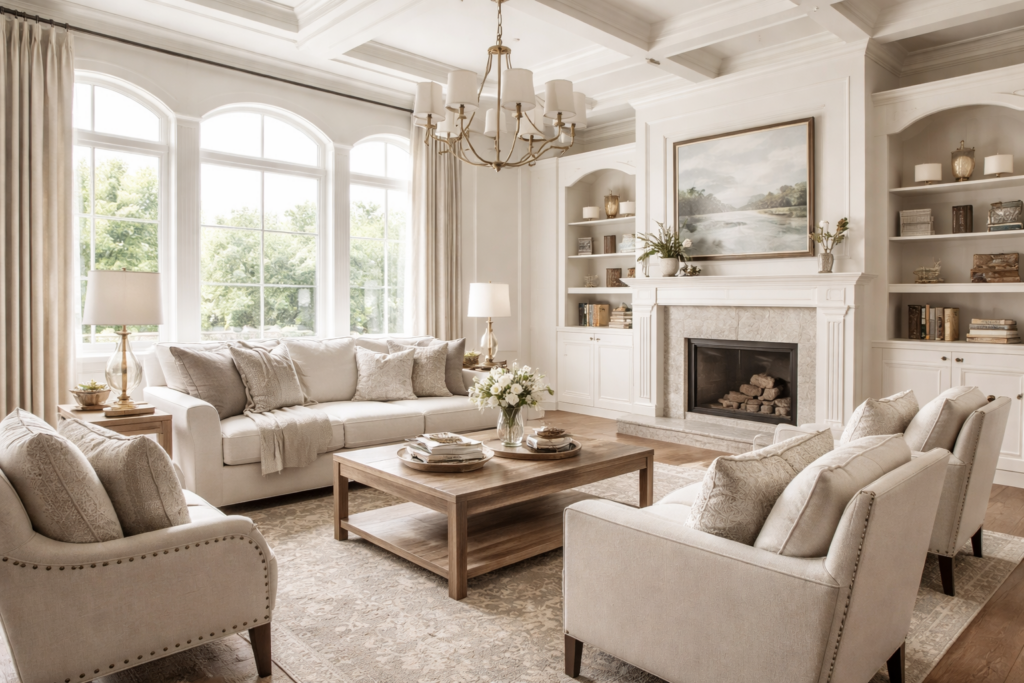
Transitional interior design is the perfect middle ground between traditional elegance and modern simplicity. It blends the warmth and familiarity of classic design with the clean lines and restraint of contemporary spaces. The result is a home that feels timeless, balanced, and effortlessly sophisticated.
This is one of those interior design styles that avoids extremes. It’s not overly ornate, and it’s not stark or minimal. Instead, transitional spaces feel comfortable, polished, and highly livable. It is ideal for modern homes that still appreciate classic roots.
Key Characteristics
- A balanced mix of traditional and modern elements
- Neutral color palettes with subtle contrast
- Clean lines softened by elegant details
- Comfortable, inviting furniture with refined shapes
- Minimal clutter with thoughtfully layered décor
Materials & Finishes
- Warm woods paired with metal or glass accents
- Linen, cotton, velvet, and textured fabrics
- Simple millwork and understated architectural details
- Matte finishes mixed with soft sheen
Furniture & Layout
- Classic sofas paired with sleek coffee tables
- Upholstered dining chairs with streamlined silhouettes
- Symmetrical layouts with a modern twist
- Statement lighting that bridges old and new
Color Palette
- Cream, beige, taupe, gray, and soft browns
- Black accents for contrast and sophistication
- Very limited use of bold colors or busy patterns
How to Bring Transitional Style into Your Home
- Start with a neutral base and layer subtle textures
- Mix one traditional piece with one modern piece in each area
- Keep décor minimal but meaningful
- Choose elegant lighting and simple artwork
- Focus on comfort, proportion, and visual balance
Transitional interiors are ideal for those who don’t want to choose between old and new. It is one of those interior design styles that feels current without being trendy.
Bohemian Interior Design
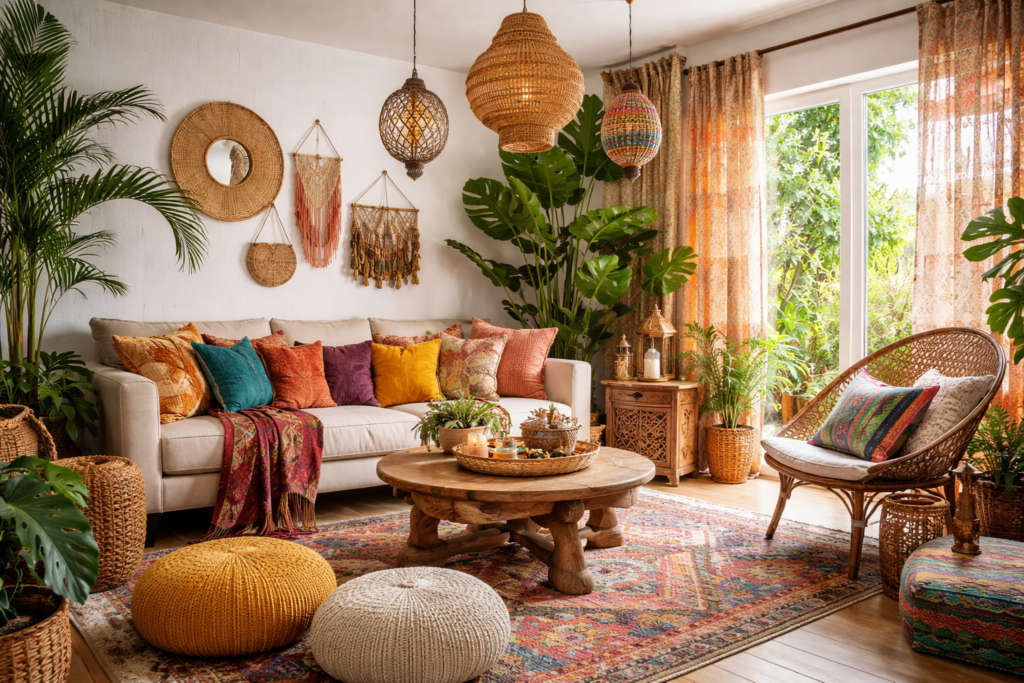
Bohemian (Boho) interior design is expressive, relaxed, and unapologetically personal. It breaks the rules on purpose. Instead of symmetry and restraint, Boho embraces layering, color, pattern, texture, and global influence to create spaces that feel collected over time.
This is one of those interior design styles that is for the free spirit: the traveler, the creative, and the collector. Rooms feel warm, lived-in, and full of stories told through textiles, plants, art, and vintage finds.
Key Characteristics
- Layered rugs, throws, and patterned textiles
- A mix of vintage, handmade, and global décor
- Plants, macramé, and woven elements
- Low, relaxed seating and cozy corners
- A curated, “collected over time” look
Materials & Finishes
- Rattan, wicker, wood, and cane
- Linen, cotton, wool, and embroidered fabrics
- Brass, copper, and handcrafted ceramics
- Natural fibers and artisanal pieces
Furniture & Layout
- Floor cushions, poufs, and low sofas
- Mismatched furniture with personality
- Reading nooks, layered lighting, and textured walls
- Open shelving to display meaningful objects
Color Palette
- Warm earthy tones: terracotta, mustard, rust, olive
- Jewel tones: teal, magenta, indigo
- Mixed patterns rather than solid color blocking
How to Bring Bohemian Style into Your Home
- Layer multiple rugs and textiles for depth
- Mix patterns confidently—stripes, florals, tribal prints
- Add plants generously throughout the space
- Incorporate handmade or vintage décor pieces
- Focus on comfort, creativity, and self-expression
Bohemian interiors are perfect for those who want their home to feel artistic, soulful, and deeply personal. It is one of those interior design styles that is less about perfection and more about personality.
Eclectic Interior Design
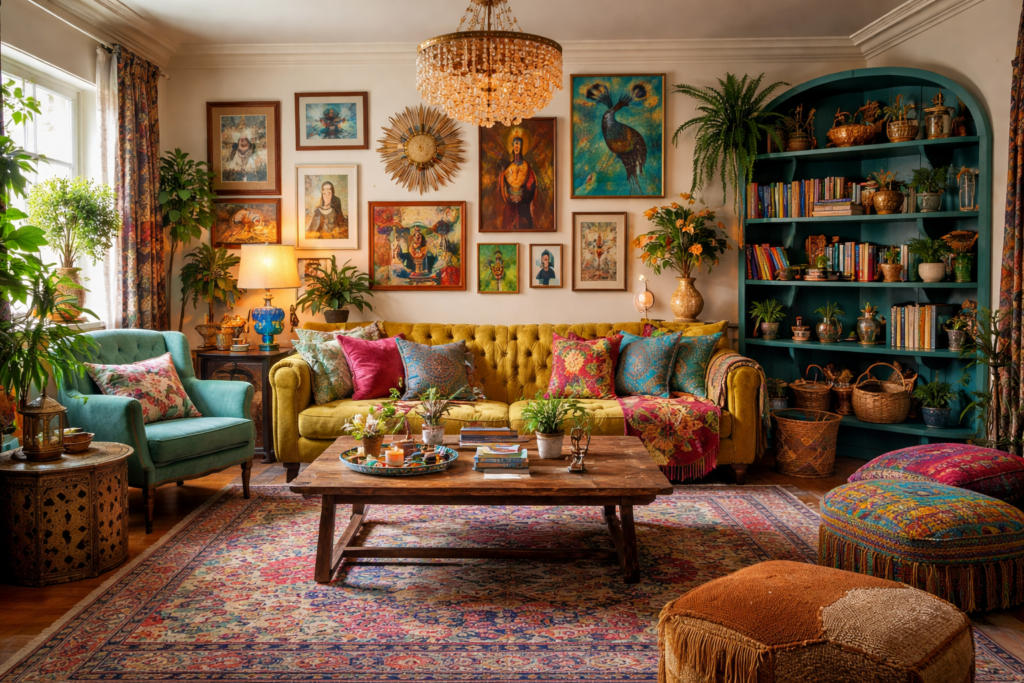
Eclectic interior design is the art of intentional contrast. It brings together pieces from different interior design styles, eras, colors, and cultures, attempting to make them work beautifully in one space. Where other styles follow a single rulebook, eclectic design writes its own.
But here is the secret: eclectic is not random. It’s highly curated. Every bold choice is balanced by another element that ties the room together through color, scale, texture, or theme.
Key Characteristics
- A thoughtful mix of styles and time periods
- Bold art, statement furniture, and layered décor
- Pattern mixing with a unifying thread
- Personality-driven design choices
- Visual balance despite contrast
Materials & Finishes
- A blend of wood, metal, glass, rattan, and textiles
- Vintage pieces paired with modern accents
- Textured rugs, throws, and upholstery
- Decorative objects collected from different sources
Furniture & Layout
- Statement sofa paired with unexpected side tables
- Gallery walls with varied frame styles and art types
- Layered rugs and mixed seating options
- Focal points created through contrast and scale
Color Palette
- Can be bold and colorful or neutral with pops of color
- Repeating one or two colors throughout for cohesion
- Patterns used freely but balanced thoughtfully
How to Bring Eclectic Style into Your Home
- Start with a base color and repeat it in different areas
- Mix old and new furniture intentionally
- Use art and décor to tell a story about your personality
- Layer textures and patterns while maintaining balance
- Eclectic works best when curated, not crowded
Eclectic interiors are perfect for those who don’t want to be boxed into one style. It is one of those interior design styles that is creative, expressive, and full of character where the unexpected becomes the highlight.
Scandinavian Interior Design
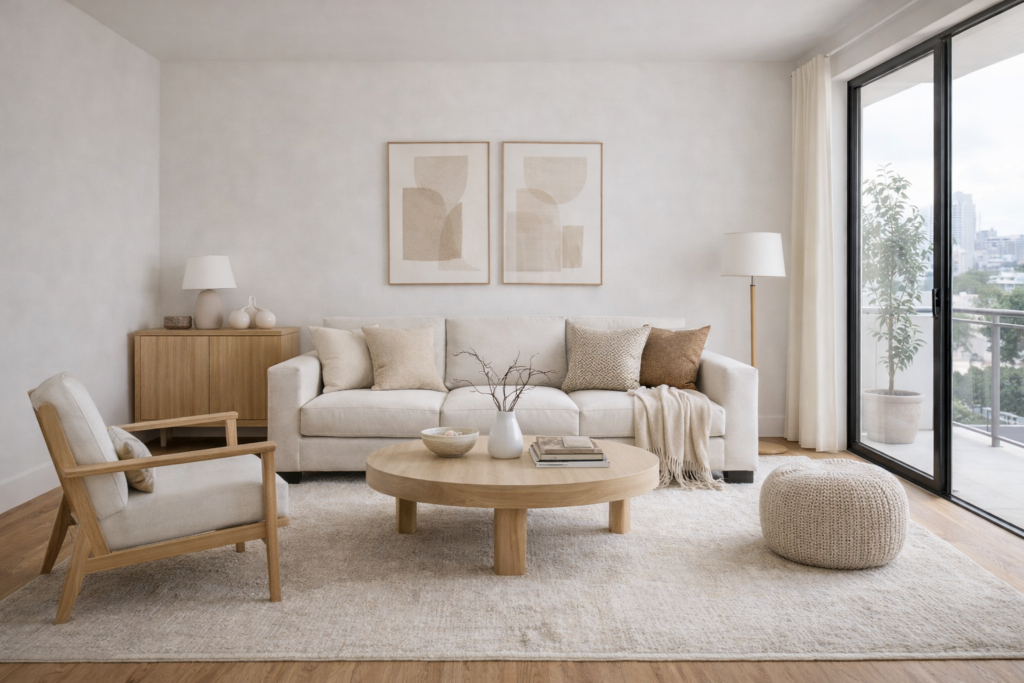
Scandinavian interior design blends minimalism with warmth. Born from Nordic living, where long winters and limited daylight shaped how homes feel, this style focuses on light, comfort, functionality, and simplicity with a cozy twist known as hygge.
Unlike stark minimalism, Scandinavian spaces feel inviting and livable. You will see white walls and clean lines softened by natural wood, plush textiles, and gentle lighting that makes the room glow.
Key Characteristics
- Bright, airy spaces with abundant natural light
- White or very light walls paired with pale wood tones
- Functional furniture with simple, elegant lines
- Cozy textiles layered for warmth and comfort
- Minimal décor with a welcoming feel
Materials & Finishes
- Light woods like birch, pine, and oak
- Linen, wool, sheepskin, and cotton fabrics
- Matte ceramics and simple glassware
- Subtle, handcrafted elements
Furniture & Layout
- Streamlined sofas and chairs with wooden legs
- Open layouts with breathable negative space
- Practical storage that keeps clutter hidden
- Reading nooks, soft throws, and warm lamps
Color Palette
- White, cream, soft gray, and beige
- Pale wood tones as a defining feature
- Gentle accents in muted blues, greens, or blush
How to Bring Scandinavian Style into Your Home
- Paint walls white or very light neutral shades
- Introduce light wood furniture and flooring
- Layer cozy textiles like throws and rugs
- Keep décor minimal but meaningful
- Maximize natural light and use warm ambient lighting
Scandinavian interiors are ideal for anyone who loves simplicity but still wants their home to feel soft, calm, and welcoming.
Japandi Interior Design
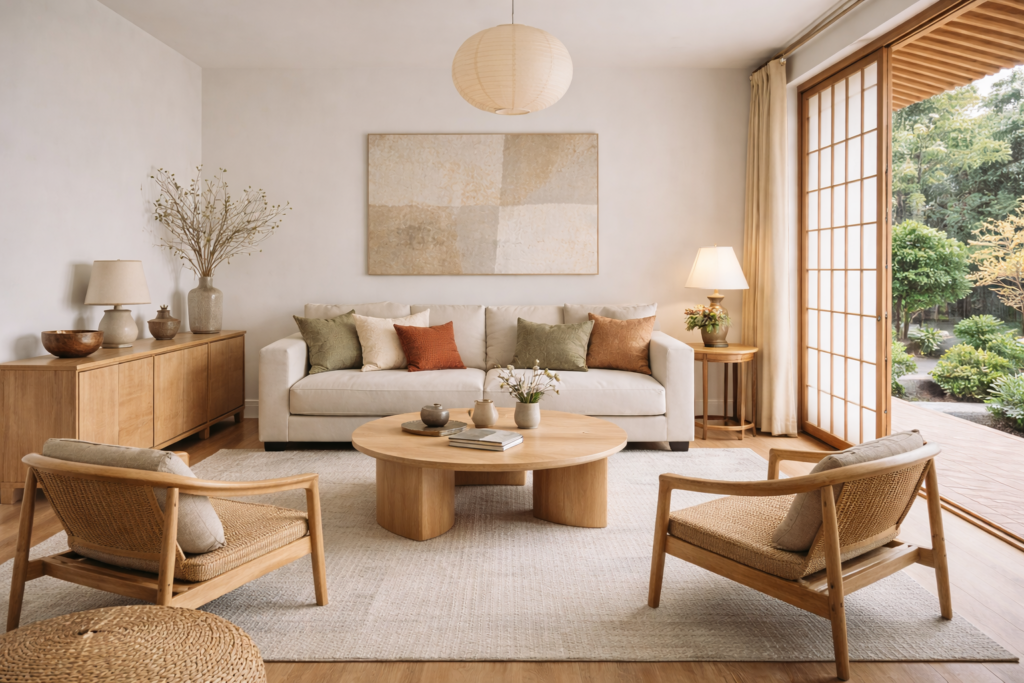
Japandi interior design is a serene fusion of Japanese minimalism and Scandinavian warmth. It combines the functionality and coziness of Nordic design with the simplicity and craftsmanship of Japanese aesthetics. The result is a space that feels calm, grounded, and deeply intentional.
This is one of those interior design styles that values quality over quantity, natural materials over synthetic ones, and peace over visual noise. Every object has purpose. Every detail feels thoughtful.
Key Characteristics
- Low-profile furniture and clean, simple lines
- Neutral, earthy color palettes with warm undertones
- Emphasis on craftsmanship and handmade pieces
- Clutter-free spaces that feel calm and balanced
- A strong connection to nature through materials and light
Materials & Finishes
- Natural woods in warm and dark tones
- Linen, cotton, wool, and textured fabrics
- Handmade ceramics and artisanal décor
- Stone, paper, and matte black accents
Furniture & Layout
- Platform beds, low sofas, and simple wood tables
- Open layouts with intentional negative space
- Functional storage that keeps surfaces clear
- Minimal décor with meaningful placement
Color Palette
- Beige, taupe, warm gray, cream, and soft brown
- Muted greens and charcoal for subtle contrast
- Tonal layering instead of bold color changes
How to Bring Japandi Style into Your Home
- Choose low, simple furniture made of natural wood
- Keep décor minimal and focus on craftsmanship
- Use soft, warm neutrals throughout the space
- Add plants and natural light to enhance calmness
- Prioritize function, balance, and simplicity in every choice
Japandi interiors are perfect for those who want a home that feels peaceful, warm, and effortlessly elegant. It is one of those interior design styles where minimalism meets comfort and simplicity becomes beautiful.
Rustic Interior Design
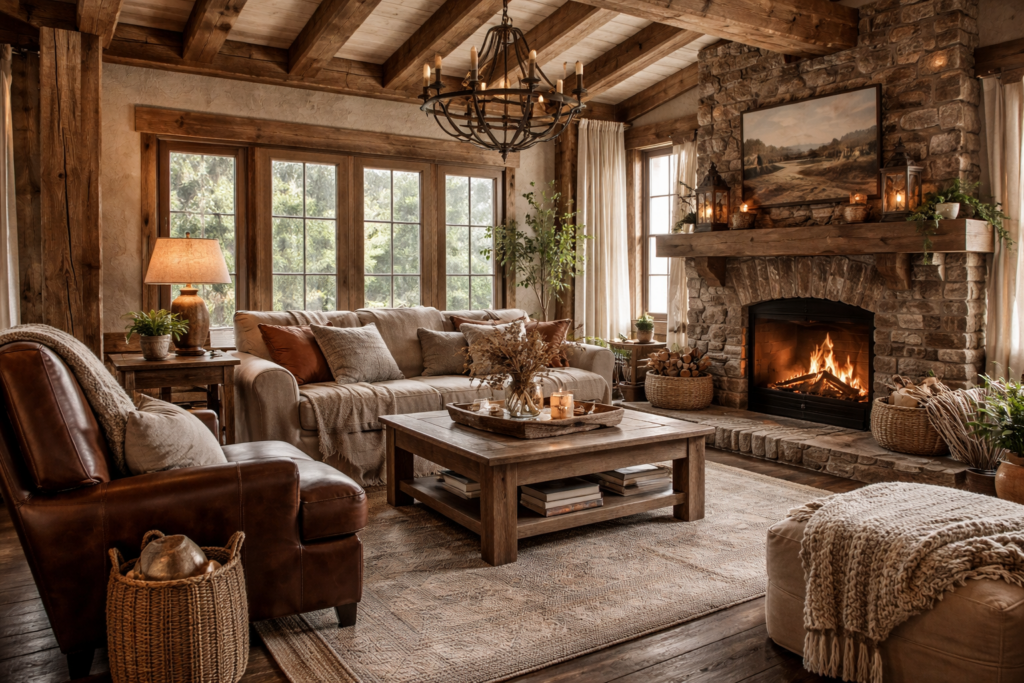
Rustic interior design celebrates the beauty of nature in its rawest form. Think weathered wood, rugged stone, warm textures, and a cozy cabin feel that instantly makes a space feel grounded and welcoming.
This is one of those interior design styles that is less about polish and more about authenticity. Imperfections are embraced. Materials look aged, lived-in, and full of character.
Key Characteristics
- Exposed wood beams, stone elements, and natural textures
- A warm, cozy, cabin-like atmosphere
- Furniture with a handcrafted, timeworn look
- Simple layouts focused on comfort and function
- Décor inspired by nature and rural living
Materials & Finishes
- Reclaimed or distressed wood
- Stone fireplaces and rough-hewn surfaces
- Leather, wool, burlap, and heavy cotton fabrics
- Wrought iron and antique metal accents
Furniture & Layout
- Solid wood tables, leather sofas, and sturdy chairs
- Layered rugs and chunky knit throws
- Open shelving and farmhouse-style storage
- Central fireplace as a focal point
Color Palette
- Earth tones: brown, tan, cream, rust, forest green
- Warm neutrals inspired by wood and stone
- Muted, natural hues rather than bright colors
How to Bring Rustic Style into Your Home
- Incorporate reclaimed wood through furniture or accents
- Add warm textiles like wool blankets and textured rugs
- Use stone or brick as a feature element if possible
- Choose furniture with a sturdy, handmade appearance
- Decorate with nature-inspired items like branches, baskets, and lanterns
Rustic interiors are ideal for those who love warmth, comfort, and a strong connection to natural materials. It is one of those interior design styles that feels honest, inviting, and effortlessly cozy.
Biophilic Interior Design
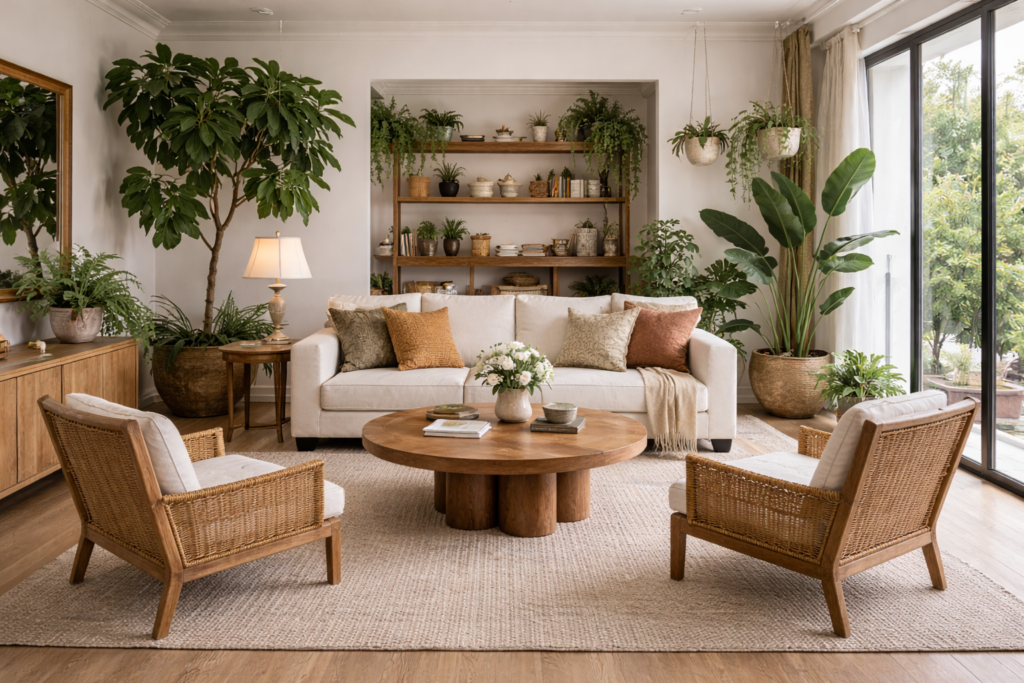
Biophilic interior design is built on one powerful idea: humans feel better when they are connected to nature. This style brings the outdoors in through plants, natural light, organic materials, and earthy textures to create spaces that support wellbeing, calm, and focus.
It is more than adding a few houseplants. Biophilic design considers how light moves through a room, how materials feel to the touch, and how the space mimics natural environments. The result is a home that feels fresh, restorative, and alive.
Key Characteristics
- Abundant greenery and living plants throughout the space
- Maximized natural light and outdoor views
- Organic shapes and nature-inspired forms
- Calm, airy layouts that reduce visual stress
- Sensory elements: texture, airflow, daylight, and scent
Materials & Finishes
- Natural wood, stone, clay, and rattan
- Linen, cotton, wool, and other breathable fabrics
- Water features, pebble textures, and raw finishes
- Botanical prints and nature-inspired artwork
Furniture & Layout
- Furniture positioned to face windows and light sources
- Open pathways and uncluttered layouts
- Use of planters, vertical gardens, and hanging plants
- Natural wood furniture with simple silhouettes
Color Palette
- Earth tones: green, brown, beige, sand, clay
- Soft neutrals inspired by nature
- Botanical hues rather than artificial brights
How to Bring Biophilic Style into Your Home
- Add a variety of indoor plants at different heights
- Keep windows unobstructed to maximize daylight
- Choose natural materials over synthetic ones
- Use earthy, calming colors throughout the space
- Incorporate textures that mimic outdoor environments
Biophilic interiors are ideal for those who want their home to feel peaceful, healthy, and deeply connected to the natural world. It is one of those interior design styles that not only looks good but feels good to live in.
Farmhouse Interior Design
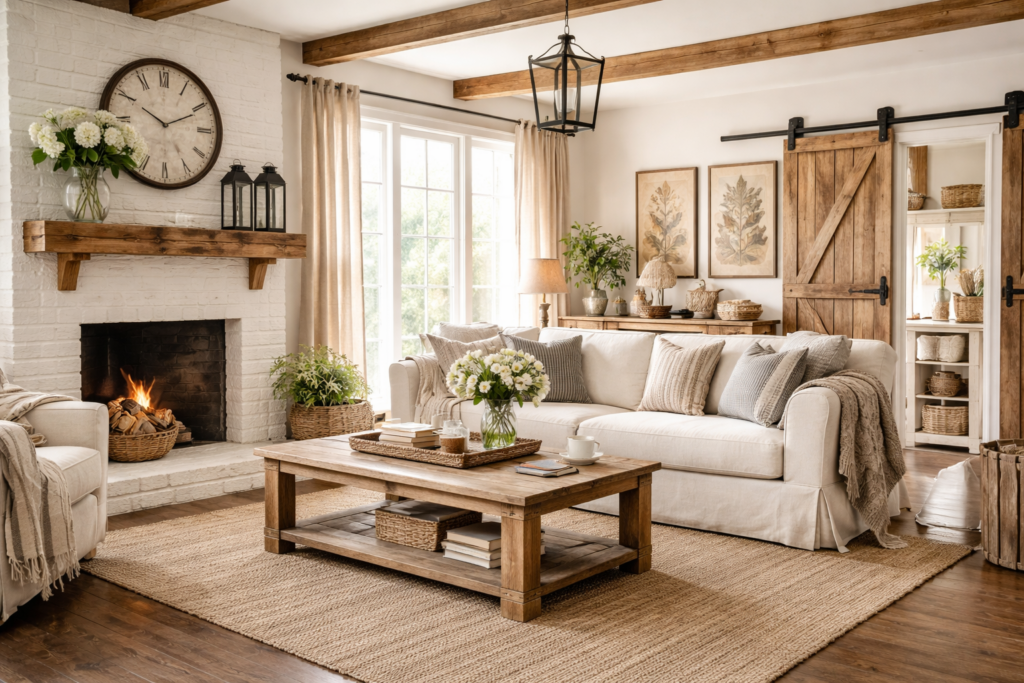
Farmhouse interior design is warm, welcoming, and rooted in rural simplicity. Inspired by country homes, this style blends rustic charm with practical comfort to create spaces that feel lived-in, cozy, and inviting.
Modern farmhouse has evolved from its traditional roots, keeping the charm while introducing cleaner lines and softer palettes. The result is a home that feels nostalgic yet fresh.
Key Characteristics
- Cozy, lived-in feel with rustic details
- Shiplap walls, barn doors, and wood accents
- A mix of vintage pieces and modern comfort
- Open shelving and practical storage
- Warm, inviting layouts centered around gathering
Materials & Finishes
- Reclaimed or distressed wood
- Wrought iron, black metal, and matte hardware
- Linen, cotton, and textured woven fabrics
- Apron-front (farmhouse) sinks and butcher block counters
Furniture & Layout
- Large rustic dining tables and mixed seating
- Comfortable sofas with layered throws and pillows
- Antique dressers, benches, and storage chests
- Open, family-friendly layouts
Color Palette
- Whites, creams, beige, and soft gray
- Warm wood tones for contrast
- Black accents for a modern farmhouse touch
How to Bring Farmhouse Style into Your Home
- Add shiplap or wood panel accents where possible
- Choose rustic wood furniture with simple lines
- Incorporate vintage décor and practical storage pieces
- Layer cozy textiles like throws and woven rugs
- Use black metal hardware and light fixtures for contrast
Farmhouse interiors are perfect for those who love comfort, charm, and a welcoming home that feels both timeless and easy to live in.
Industrial Interior Design
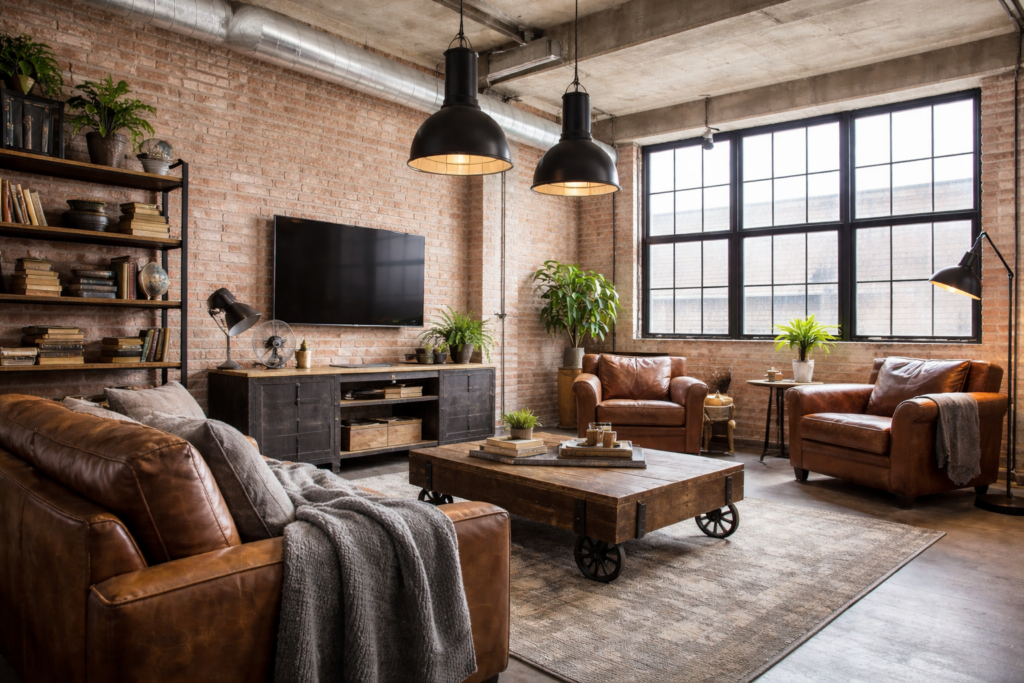
Industrial interior design takes its cues from old factories and urban warehouses. It celebrates raw materials, exposed structures, and unfinished beauty.
This is one of those interior design styles that feels bold, edgy, and authentic. Brick walls, visible pipes, concrete floors, and metal accents create a space that feels urban, practical, and effortlessly cool.
Key Characteristics
- Exposed brick, ducts, beams, and pipes
- Open layouts with high ceilings and large windows
- A raw, unfinished aesthetic with character
- Minimal décor with statement materials
- A blend of rugged and refined elements
Materials & Finishes
- Concrete, steel, iron, and reclaimed wood
- Leather upholstery and distressed finishes
- Black metal frames and hardware
- Edison bulbs and factory-style lighting
Furniture & Layout
- Reclaimed wood tables with metal legs
- Leather sofas and metal-framed shelving
- Open shelving instead of closed cabinetry
- Vintage or factory-inspired décor pieces
Color Palette
- Neutrals: gray, black, brown, and white
- Warm wood tones to soften the space
- Occasional deep accents like navy or rust
How to Bring Industrial Style into Your Home
- Highlight architectural elements instead of covering them
- Mix metal and wood in furniture and fixtures
- Use open shelving and minimal cabinetry
- Choose statement lighting with an industrial feel
- Keep décor simple and let materials be the focus
Industrial interiors are ideal for those who love urban living, bold textures, and spaces with strong character. It is one of those interior design styles where imperfection becomes the design highlight.
French Country Interior Design
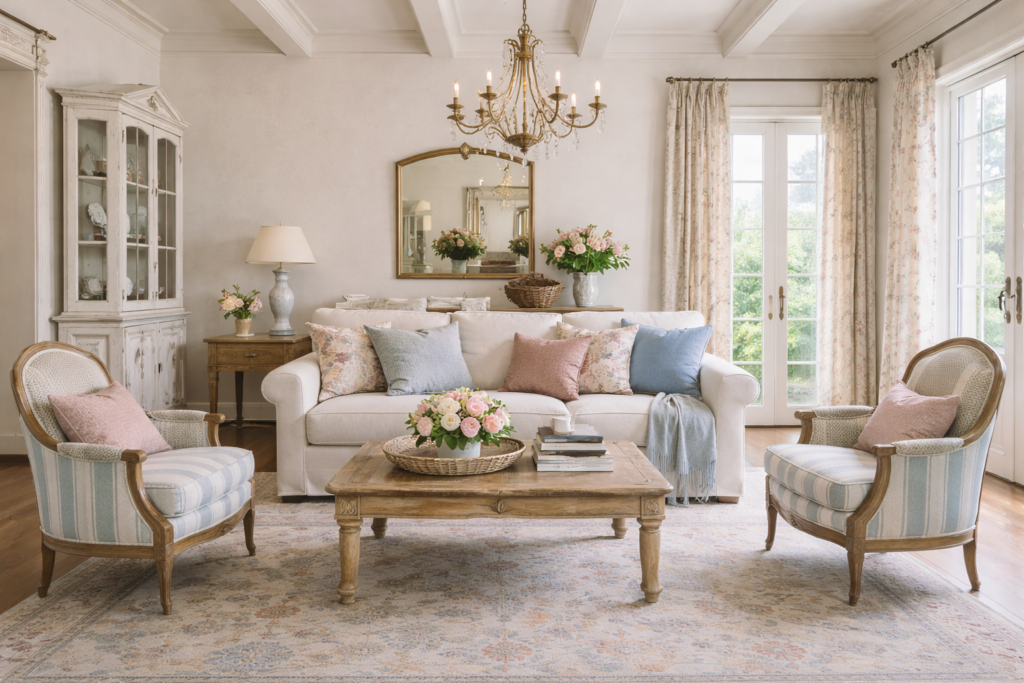
French Country interior design blends rustic charm with refined elegance. Inspired by homes in the French countryside, this style feels warm, romantic, and effortlessly graceful where aged finishes, soft colors, and classic details come together beautifully.
It is less formal than traditional design but more polished than farmhouse. The look is lived-in yet sophisticated, with a gentle mix of weathered wood, floral patterns, and antique-inspired décor.
Key Characteristics
- Distressed wood finishes and rustic architectural details
- Soft florals, toile patterns, and elegant curves
- A balance of comfort and sophistication
- Vintage or antique-style furnishings
- Warm, inviting spaces with a romantic feel
Materials & Finishes
- Weathered oak, walnut, and painted wood furniture
- Stone floors, rustic beams, and plaster walls
- Linen, cotton, and patterned upholstery
- Copper, iron, and antique brass accents
Furniture & Layout
- Carved wood headboards, armoires, and sideboards
- Upholstered dining chairs and rustic farm tables
- Elegant chandeliers and wall sconces
- Layered textiles and vintage rugs
Color Palette
- Cream, soft white, beige, and warm gray
- Muted blues, sage green, lavender, and blush
- Natural wood tones for warmth and depth
How to Bring French Country Style into Your Home
- Choose furniture with curved lines and distressed finishes
- Incorporate floral or toile fabrics in subtle ways
- Add vintage lighting like chandeliers or sconces
- Use warm neutrals and soft pastel accents
- Layer in rustic textures with stone, wood, and linen
French Country interiors are perfect for those who love a home that feels elegant, welcoming, and full of old-world charm without being overly formal.
Mediterranean Interior Design
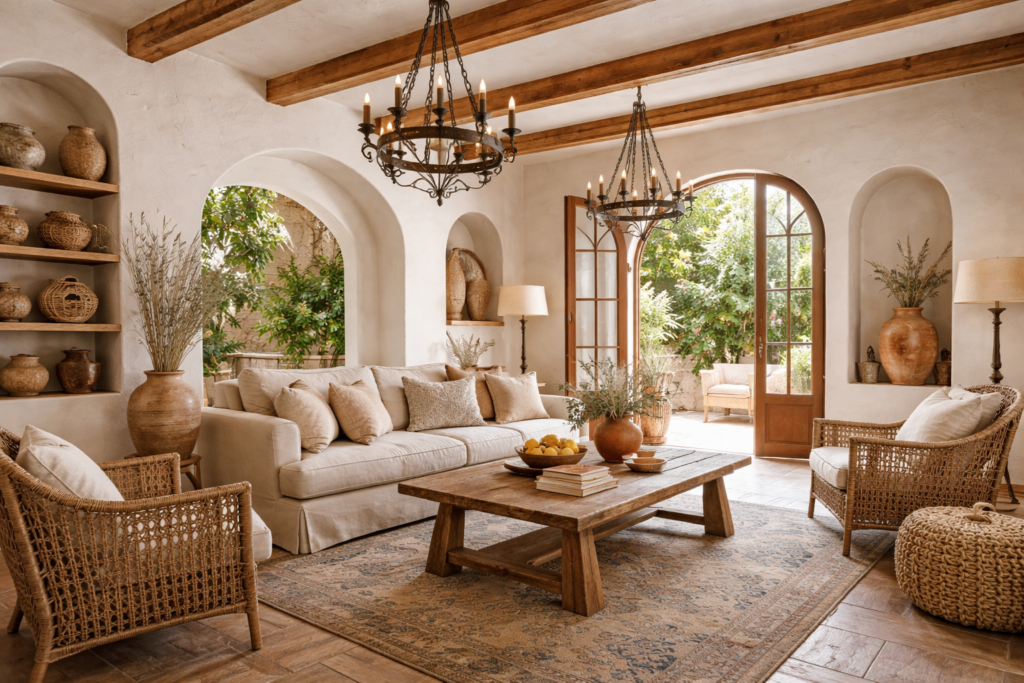
Mediterranean interior design is inspired by homes along the coasts of Spain, Italy, and Greece. It is warm, sun-soaked, and welcoming. It is a style that is built around arched architecture, textured walls, earthy materials, and relaxed elegance.
This style feels timeless and airy, with natural light bouncing off plaster walls, terracotta floors underfoot, and wrought iron details adding character. This is one of those interior design styles that is rustic but refined.
Key Characteristics
- Arched doorways, windows, and architectural curves
- Textured stucco or plaster walls
- Terracotta tiles and warm stone elements
- Wrought iron accents and rustic wood beams
- Indoor–outdoor flow with courtyards or patios
Materials & Finishes
- Terracotta, clay, stone, and textured plaster
- Dark or weathered wood furniture
- Wrought iron railings, lighting, and décor
- Hand-painted tiles and mosaic details
Furniture & Layout
- Solid wood tables and carved wood accents
- Open shelving and rustic cabinetry
- Simple, sturdy furniture with artisanal charm
- Spaces designed for gathering and relaxation
Color Palette
- Warm neutrals: cream, sand, beige, and ochre
- Ocean-inspired blues and sea greens
- Rust, clay, and earthy browns
How to Bring Mediterranean Style into Your Home
- Use textured paint or plaster finishes on walls
- Add terracotta planters and natural pottery
- Incorporate wrought iron lighting or décor
- Choose warm wood furniture and earthy textiles
- Introduce blue and white tiles or accents for coastal character
Mediterranean interiors are ideal for those who love warmth, texture, and a relaxed elegance that feels both rustic and sophisticated. This is one of those interior design styles that brings vacation back home.
Moroccan Interior Design
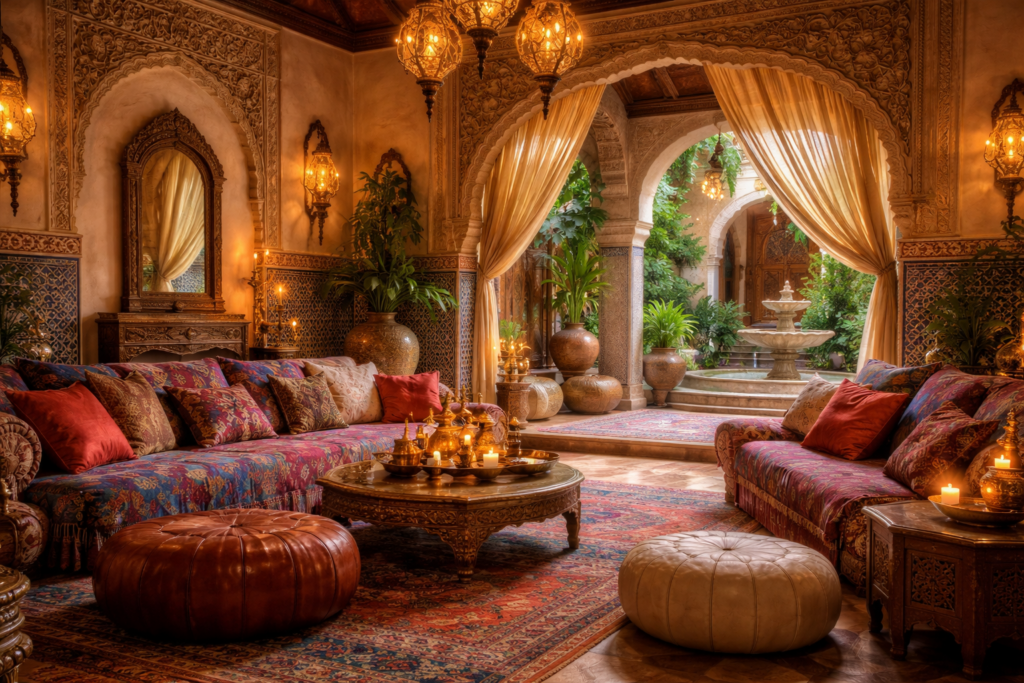
Moroccan interior design is bold, vibrant, and richly decorative. Rooted in North African culture, this style is known for carved wood patterns and colorful textiles that create spaces full of warmth and visual rhythm.
It is one of those interior design styles that is sensory. You don’t just see it; you feel it. The glow of lantern light, the texture of layered rugs, the geometry of mosaic tiles, and the richness of color all work together to create an exotic, welcoming atmosphere.
Key Characteristics
- Intricate geometric patterns and mosaic tiles
- Arches, alcoves, and decorative architectural shapes
- Layered rugs, poufs, and low seating
- Ornate metal lanterns and warm ambient lighting
- A rich, collected, globally inspired look
Materials & Finishes
- Zellige tiles, carved wood, and plaster details
- Brass, copper, and wrought iron lighting
- Wool rugs, embroidered textiles, and leather poufs
- Handcrafted ceramics and decorative trays
Furniture & Layout
- Low sofas, floor cushions, and poufs for relaxed seating
- Carved wood tables and decorative screens
- Layered textiles across floors and walls
- Intimate seating arrangements designed for gathering
Color Palette
- Jewel tones: sapphire, emerald, ruby, amethyst
- Warm hues: terracotta, gold, burnt orange
- Pops of blue and white in tilework
How to Bring Moroccan Style into Your Home
- Add patterned rugs and colorful textiles
- Use lantern-style lighting for a warm glow
- Incorporate mosaic tiles in small accents (backsplash, table)
- Introduce poufs, floor cushions, and carved wood décor
- Embrace bold color and pattern confidently
Moroccan interiors are perfect for those who love color, culture, and decorative detail. It is one of those interior design styles that feels warm, expressive, and beautifully immersive.
Gothic Interior Design
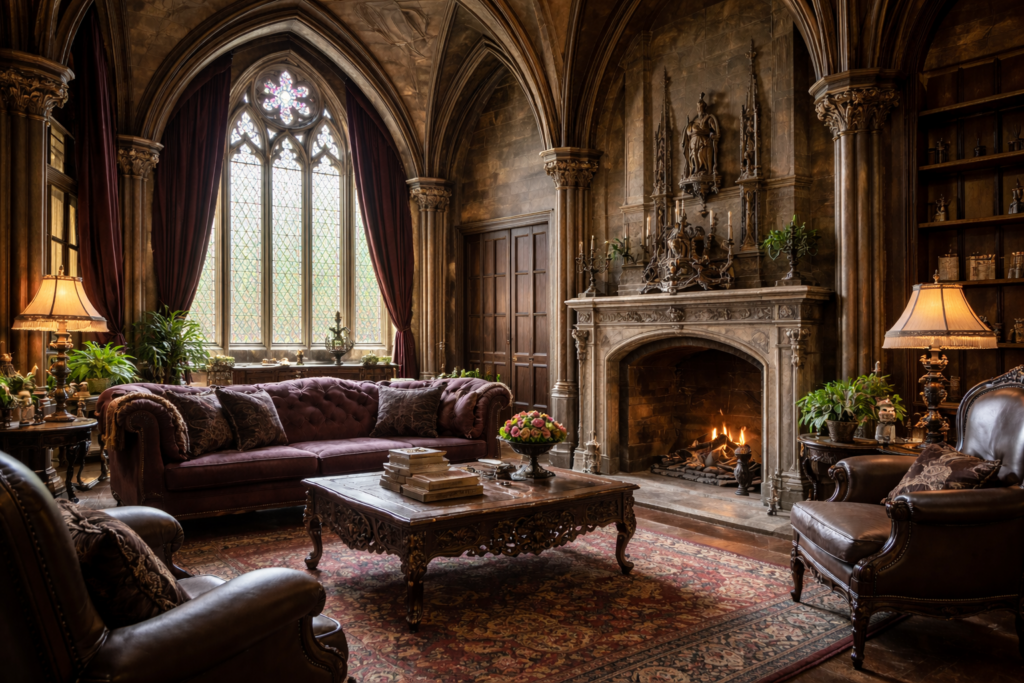
Gothic interior design is dramatic, mysterious, and richly atmospheric. Inspired by medieval architecture and old European cathedrals, this style embraces pointed arches, dark tones, ornate carvings, and moody lighting to create spaces that feel romantic and theatrical.
It is one of those interior design styles that is not minimal nor subtle but are immersive and expressive.
Key Characteristics
- Pointed arches and cathedral-inspired shapes
- Dark wood furniture with ornate carvings
- Velvet drapes, tapestries, and layered textiles
- Candle-style lighting and wrought iron accents
- A moody, dramatic atmosphere
Materials & Finishes
- Dark oak, walnut, and carved wood
- Stone, brick, and aged plaster textures
- Velvet, brocade, leather, and heavy fabrics
- Wrought iron, brass, and antique metals
Furniture & Layout
- Canopy beds, heavy wooden desks, and high-backed chairs
- Bookshelves, tapestries, and statement mirrors
- Intimate seating areas with dramatic lighting
- Decorative objects that feel historic and ornate
Color Palette
- Deep tones: burgundy, plum, navy, charcoal, forest green
- Black accents for contrast and drama
- Gold and brass highlights for richness
How to Bring Gothic Style into Your Home
- Use dark paint colors or rich wallpaper
- Incorporate carved wood or antique-style furniture
- Add velvet curtains and textured fabrics
- Choose candle-style or wrought iron lighting
- Layer décor to create depth and mystery
Gothic interiors are ideal for those who love drama, history, and a bold, romantic atmosphere. It is one of those interior design styles that transforms a home into a captivating, old-world retreat.
Coastal Interior Design
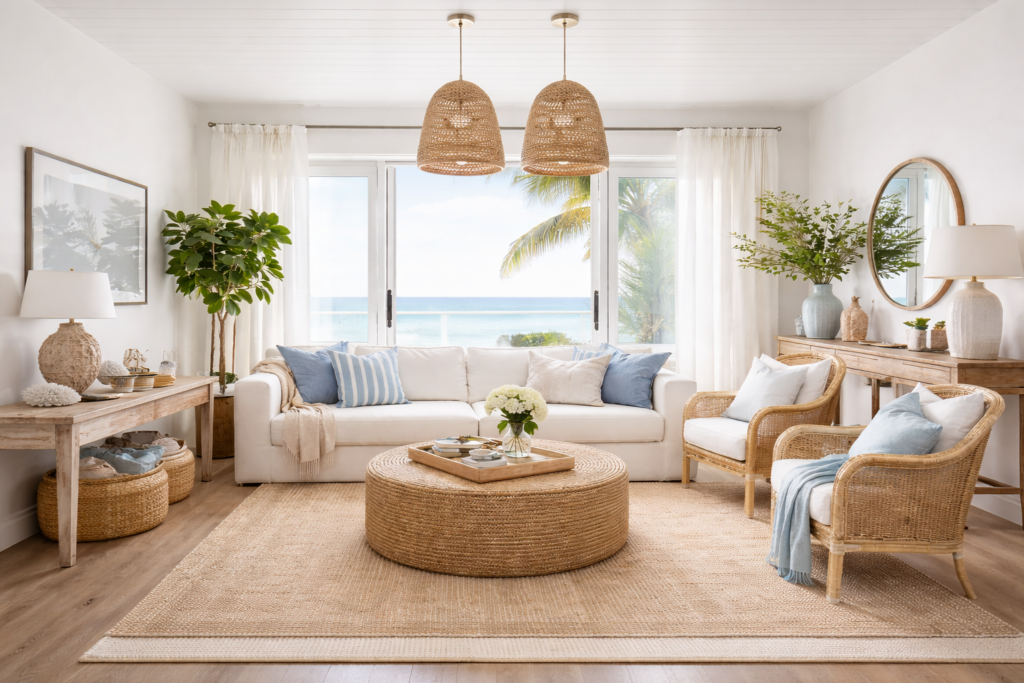
Coastal interior design captures the relaxed, breezy feeling of life by the water. It is light, airy, and effortlessly calm. Often times, it is built around soft neutrals, ocean hues, natural fibers, and sunlit spaces that feel fresh and welcoming.
This style isn’t about seashell overload or nautical clichés. Instead, it subtly reflects the coast through color, texture, and openness. The goal is to make a room feel like a gentle and fresh breathing exercise.
Key Characteristics
- Bright, airy rooms with plenty of natural light
- Soft white and sandy neutrals as a base
- Blue, seafoam, and sea-glass accents
- Natural textures like rattan, jute, wicker, and linen
- Minimal décor with a relaxed, uncluttered feel
Materials & Finishes
- Light woods, driftwood tones, and whitewashed finishes
- Linen upholstery and cotton textiles
- Woven rugs, baskets, and wicker furniture
- Sheer curtains that allow light to flow through
Furniture & Layout
- Slipcovered sofas, light wood tables, and rattan chairs
- Open layouts that feel breathable and easy
- Simple shelving and minimal accessories
- Plants and greenery to add freshness
Color Palette
- White, cream, beige, and sand tones
- Ocean blues, aqua, and soft greens
- Subtle stripes or organic patterns
How to Bring Coastal Style into Your Home
- Use white or light neutral walls to brighten the space
- Add woven textures through rugs, baskets, and chairs
- Incorporate blue accents through pillows, art, or décor
- Keep décor minimal and avoid heavy furniture
- Let natural light be a defining feature
Coastal interiors are perfect for those who want a home that feels like a year-round beach retreat.
Interior Design Styles Made Easy
Understanding these twenty (20) popular interior design styles gives you more than inspiration. It gives you direction. When you can recognize the difference, decorating stops feeling overwhelming. When you are just starting out, we recommend you choose one style and stick with it. Then when you get more comfortable, you can explore mixing, matching, and personalizing.
Additionally, you will also notice that some interior design styles are so similar that they will go well together, these are good areas for experimentation for beginners. Other times, some styles are already a fusion of two other styles. This is the beauty in understanding interior design styles.
As you make plans for your next project or home, don’t forget the real goal of knowing your style: to build clarity, confidence, and cohesion. Last and definitely not the least, have fun!
While you are still here, check out our blog post: Sixteen (16) Stylish Home Chair Types You Need to Know.
